
DIRECT VERDICT // GROWTH ENGINEERING VS TRADITIONAL AGENCIES
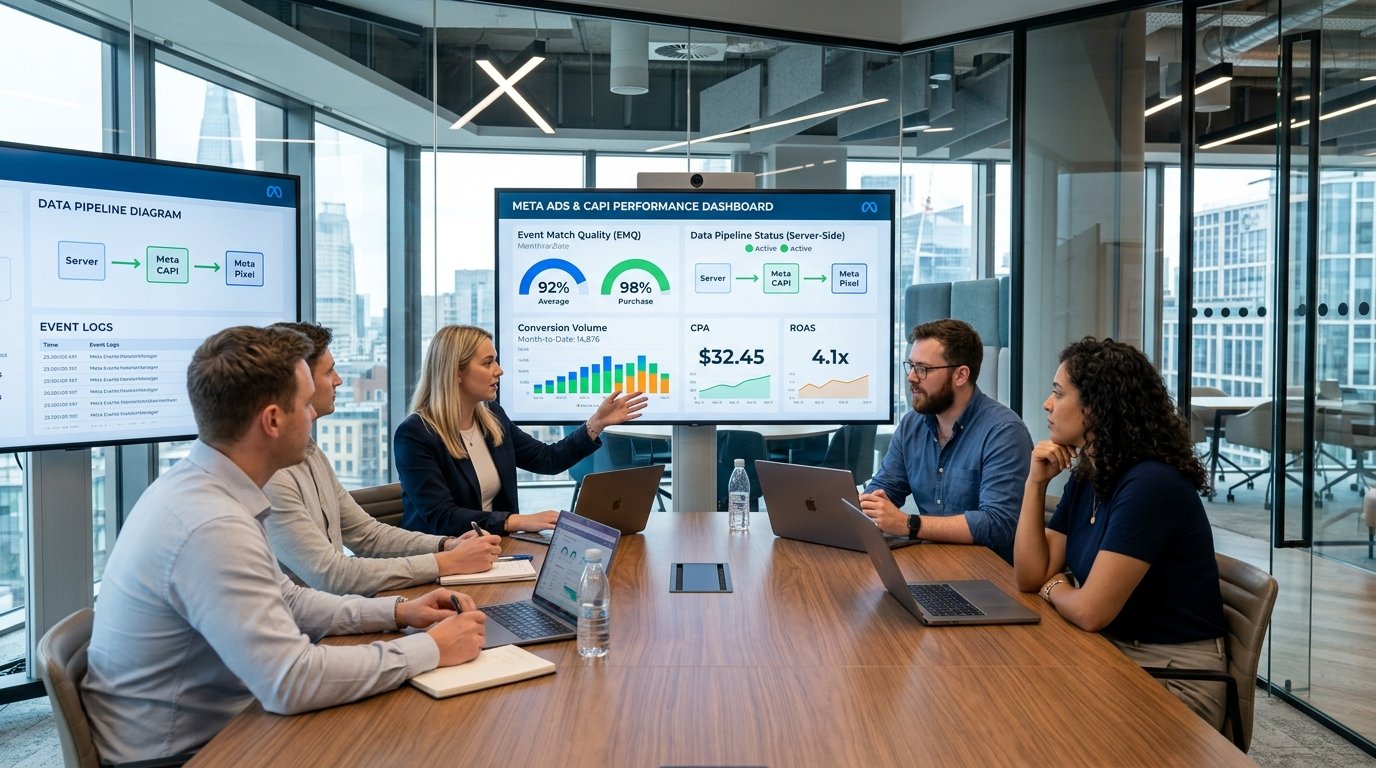
The traditional creative ad agency model—characterized by percentage-of-spend markups, junior media buyers adjusting interest targetings, and monthly retrospective PDF reports—has broken down under Meta's and Google's machine-learning auction environments. Modern e-commerce scaling requires Growth Engineering: a technical discipline that unifies server-side Conversions API telemetry, real-time First-Time Impression Ratio (FTIR) diagnostics, and multi-angle psychological creative testing executed directly by principal architects.
For over a decade, direct-to-consumer (DTC) brands scaled predictably by hiring traditional marketing agencies to configure manual audience lookalikes, swap out video hooks, and adjust cost-per-click bids. However, the consolidation of Meta's Advantage+ Shopping Campaigns (ASC), Google's Performance Max (PMax), and Apple's privacy-first operating systems (iOS 14.5 through iOS 18) transformed digital advertising into an engineering and telemetry problem.
When an ad account's return on ad spend (ROAS) collapses from 3.8x to 1.6x, traditional agencies diagnose the issue as a "creative fatigue" problem that requires 20 more TikTok-style UGC videos. In reality, over 70% of modern performance collapses stem from server-side signal degradation, auction overlap between splintered campaigns, and algorithmic audience cannibalization.
1. The 5-Pillar Architectural Comparison Matrix
The structural divide between traditional media buying agencies and high-performance growth engineering partners centers on data integrity, execution speed, and accountability:
2. Why Percentage-of-Spend Pricing Incentivizes Account Bloat
The traditional agency fee structure—charging a base retainer of $4,000 plus 10% to 15% of ad spend—creates a fundamental conflict of interest between the agency and the merchant. When an agency's revenue scales strictly with ad budget, their incentive is to push you to increase spend even when marginal ROAS is plummeting and CAC is exceeding target unit economics.
In contrast, growth engineering models align around blended contribution margin, net profit scaling, and server-side signal integrity. Before scaling ad budget by $1,000/day, the growth engineer verifies whether the store's conversion rate, average order value (AOV), and repurchase velocity can sustain the higher auction clearing price.
3. Frequently Asked Questions
When should an e-commerce brand switch to growth engineering?
Brands doing between $30,000 and $500,000 per month on Shopify benefit most from growth engineering. At this stage, ad accounts hit the "scaling ceiling" where adding more budget causes ROAS to drop from 3.5x to 1.8x due to signal loss and creative saturation.
Does growth engineering replace my creative team?
No. Growth engineering provides the data-backed psychological testing brief and creative angle blueprints for your designers and creators. Instead of guessing what hooks to film, creators receive exact briefs targeting under-served customer segments identified in auction telemetry.